
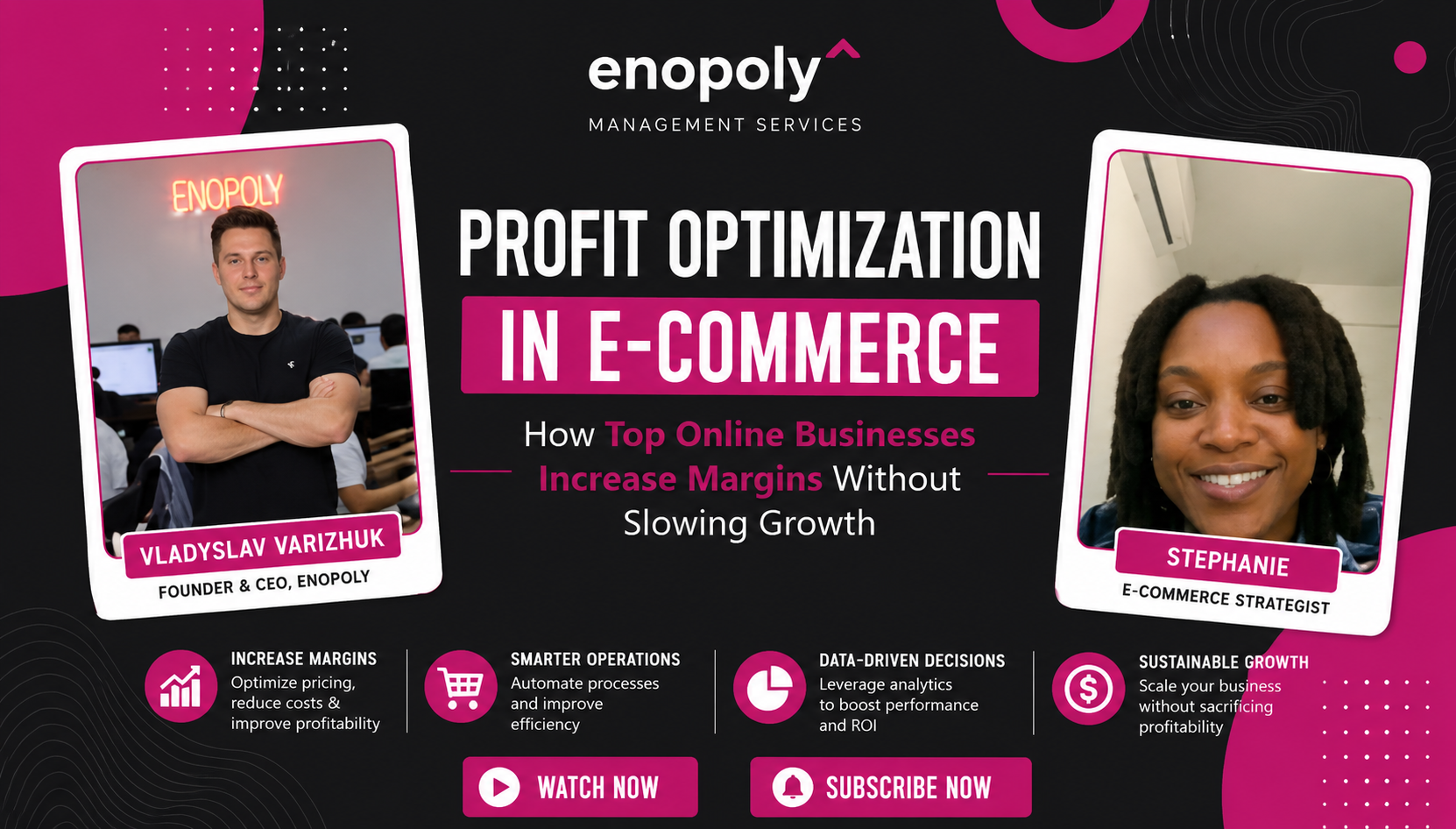
E-commerce businesses often face a difficult challenge. They want to grow quickly, but rapid growth can reduce profit margins if costs are not carefully controlled. The most successful companies do not choose between growth and profit. Instead, they build systems that improve both at the same time.
In 2026, profit optimization has become one of the most important areas of focus in e-commerce. Rising competition, higher advertising costs, and increasing customer expectations mean businesses must be more efficient than ever. Companies that master profit optimization are able to scale while still improving their margins. This article explains how they do it in practical terms.
Understanding Profit Optimization in E-Commerce
Profit optimization means improving the difference between revenue and cost without slowing down business growth. It is not about cutting corners or reducing quality. It is about making smarter decisions across the entire business model.
Revenue Quality Over Revenue Volume
Many businesses focus only on increasing sales. However, top-performing companies focus on the quality of revenue.
High-quality revenue comes from customers who buy more often, return less, and have higher lifetime value. This type of revenue supports stronger margins over time.
Controlling Hidden Costs
Profit leaks often come from hidden costs such as returns, inefficient shipping, poor inventory planning, and ineffective marketing spend. These costs are not always obvious but have a major impact on margins.
Successful companies continuously monitor and reduce these hidden inefficiencies.
Pricing Systems That Improve Margins
Pricing is one of the most powerful tools in profit optimization. Even small pricing improvements can significantly increase margins at scale.
Value-Based Pricing Strategy
Instead of competing only on price, leading e-commerce companies focus on perceived value. They position products based on quality, trust, and customer experience.
This allows them to maintain stronger margins without losing demand. Customers are often willing to pay more when value is clearly communicated.
Smart Discounting Systems
Discounting is useful but can easily reduce profitability if not controlled. Top businesses use structured discount systems rather than random promotions.
They analyze customer behavior and only apply discounts when they increase long-term value, not just short-term sales.
Cost Control Without Slowing Growth
Reducing costs does not have to limit expansion. The key is improving efficiency rather than simply cutting spending.
Supplier Optimization and Negotiation
Strong e-commerce companies regularly review supplier relationships. They negotiate better pricing, improve contract terms, and seek more reliable partners.
Even small reductions in product cost can significantly improve margins at scale.
Reducing Operational Waste
Operational waste comes from inefficiencies in packaging, handling, and fulfillment. Businesses that streamline these areas reduce costs without affecting customer experience.
Automation also plays a major role in lowering operational expenses while maintaining speed and accuracy.
Marketing Efficiency as a Profit Driver
Marketing is one of the largest expenses in e-commerce, but it is also one of the biggest opportunities for profit optimization.
Customer Acquisition Cost Control
Top businesses closely monitor how much it costs to acquire a customer. If acquisition costs rise too high, margins shrink quickly.
Successful companies constantly test and refine campaigns to keep acquisition costs within profitable ranges.
High-Return Channel Focus
Not all marketing channels perform equally. Leading companies shift spending toward channels that deliver the highest return on investment.
This reduces waste and ensures marketing spend directly supports profitability.
Increasing Lifetime Value for Stronger Margins
One of the most effective ways to improve margins is to increase how much each customer spends over time.
Repeat Purchase Systems
Businesses that encourage repeat purchases reduce their reliance on expensive new customer acquisition.
Email marketing, loyalty programs, and subscription models all help increase lifetime value and improve overall profitability.
Cross-Selling and Bundling
Offering complementary products or bundles increases average order value. This improves margins without increasing marketing costs.
These strategies are simple but highly effective when applied consistently.
Inventory and Supply Chain Efficiency
Inventory is one of the largest financial commitments in e-commerce. Poor inventory management can quickly reduce profit margins.
Demand Forecasting Systems
Top companies use data to predict demand more accurately. This helps prevent overstocking and stockouts, both of which can harm profitability.
Better forecasting leads to stronger cash flow and lower storage costs.
Faster Inventory Turnover
Inventory that moves quickly generates better returns. Businesses aim to keep products flowing rather than sitting in warehouses for long periods.
High turnover improves cash efficiency and reduces risk.
Operational Automation and Scalability
Automation helps businesses scale without increasing costs at the same rate.
Process Automation Systems
Leading companies automate repetitive tasks such as order processing, customer communication, and inventory updates.
This reduces labor costs and improves accuracy at the same time.
Scalable Fulfillment Systems
Efficient fulfillment systems ensure that growth does not lead to operational breakdowns. Companies that optimize logistics can handle more orders without significantly increasing overhead.
Enopoly has focused on structured operational systems that support both scaling and margin control, showing how efficiency and growth can work together.
Data-Driven Profit Optimization
Data is essential for identifying where profits are being gained or lost.
Profit Per Product Analysis
Successful companies track which products generate the highest margins. This helps them focus on high-performing items and reduce investment in low-performing ones.
Real-Time Performance Tracking
Real-time dashboards allow businesses to monitor revenue, costs, and margins continuously.
This enables faster decision-making and prevents small issues from becoming larger financial problems.
Strategic Partnerships That Improve Margins
Partnerships can significantly improve profitability when managed correctly.
Supplier and Logistics Partnerships
Strong partnerships often lead to better pricing, improved reliability, and lower operational costs.
These advantages directly contribute to higher margins without slowing growth.
Operational Collaboration
Working with experienced fulfillment and service partners allows businesses to scale more efficiently.
Enopoly demonstrates how structured partnerships can strengthen profitability while supporting expansion across multiple areas of operations.
Balancing Growth and Profit at the Same Time
The most successful e-commerce companies do not treat growth and profit as separate goals. They design systems that support both simultaneously.
Profit-First Decision Making
Every decision is evaluated based on both growth impact and margin impact. This prevents businesses from scaling in ways that destroy profitability.
Continuous Optimization Culture
Top companies constantly refine pricing, marketing, operations, and customer experience. Small improvements compound into significant profit gains over time.
Conclusion
Profit optimization in e-commerce is not about reducing ambition. It is about building smarter systems that allow businesses to grow while improving margins.
The most effective strategies include pricing optimization, cost control, marketing efficiency, inventory management, and customer lifetime value growth. When combined, these systems create sustainable profitability at scale.
Enopoly reflects this approach by focusing on structured operations, efficient systems, and strategic partnerships that support both growth and margin improvement.
Ultimately, the companies that succeed are not just the ones that grow fastest, but the ones that grow profitably without slowing down.